HANDBOOK: Media Literacy in light of Political Participation and engagement in Democratic processes

HANDBOOK: Media Literacy in light of Political Participation and engagement in Democratic processes

Description

This content report is based on the Learning, Teaching, Training Activity (LTTA) „Media Literacy in light of Political Participation and engagement in Democratic processes”, organised as part of the activities of the project „Critical thinking and participation as a foundation of democracy in Europe“.


Training course activity was organised in period 01.08.-11.08.2022. in Split, Croatia. LTTA „Media Literacy in light of Political Participation and engagement in Democratic processes” is based on non-formal education and learning-by-doing methods. Activity provided participants with an opportunity to create their own learning expectations and outcomes but also to discover themselves and their own personal limits.


LTTA activity was focused on raising competences of the youth workers/teachers/educators in topics of media literacy, how to approach this topic and how to raise critical thinking in the youngsters. On this second LTTA youth workers learned the definitions of these terms, explored examples of good practice and gavesuggestions and recommendations to experts for developing a Handbook 2 on these topics with ten concrete workshops that youth workers/educators/teachers can implement in their local communities for youngsters, especially NEET and youth with fewer opportunities.


We hope this material will be helpful for other youth workers – as a starting point for developing new projects and ideas or as a resource used for organising educational sessions on the topic of media literacy; for young people and youth workers across local communities in Europe.


Beschreibung

Dieser Inhaltsbericht basiert auf der Learning, Teaching, Training Activity (LTTA) „Media Literacy in light of Political Participation and engagement in Democratic Processes“, die im Rahmen der Aktivitäten des Projekts „Kritisches Denken und Partizipation als Fundament der Demokratie in Europa”.


Die Schulungsaktivität wurde im Zeitraum 01.08.-11.08.2022 organisiert. in Split, Kroatien. LTTA „Media Literacy in light of Political Participation and engagement in Democratic Processes“ basiert auf non-formalen Bildungs- und Learning-by-Doing-Methoden. Die Aktivität bot den Teilnehmern die Möglichkeit, ihre eigenen Lernerwartungen und -ergebnisse zu entwickeln, aber auch sich selbst und ihre eigenen persönlichen Grenzen zu entdecken.


Die LTTA-Aktivität konzentrierte sich auf die Erhöhung der Kompetenzen derJugendbetreuer/Lehrer/Pädagogen in Themen der Medienkompetenz, wie man dieses Thema angeht und wie man das kritische Denken bei den Jugendlichen fördert. Bei diesem zweiten LTTA lernten Jugendbetreuer die Definitionen dieser Begriffe, erkundeten Beispiele guter Praxis und gaben Experten Vorschläge und Empfehlungen für die Entwicklung eines Handbuchs 2 zu diesen Themen mit zehn konkreten Workshops, die Jugendbetreuer/Pädagogen/Lehrer in ihren lokalen Gemeinschaften umsetzen können fürJugendliche, insbesondere NEET und Jugendliche mit geringeren Chancen.


Wir hoffen, dass dieses Material für andere Jugendbetreuer hilfreich ist – als Ausgangspunkt für dieEntwicklung neuer Projekte und Ideen oder als Ressource für die Organisation von Bildungsveranstaltungen zum Thema Medienkompetenz; für junge Menschen und Jugendbetreuer in lokalen Gemeinschaften in Europa.

Share this post

Facebook
Twitter
LinkedIn

HANDBOOK: Active political participation, engagement in democratic processes

HANDBOOK: Active political participation, engagement in democratic processes

Description

This handbook is based on the Learning, Teaching, Training Activity (LTTA) “Active political participation, engagement in democratic processes” organised as part of the activities of the project “Critical thinking and participation as a foundation of democracy in Europe”.

Training course activity was organised in period 10.04. – 20.04.2022. in Mostar, Bosnia and Herzegovina.


LTTA “Active political participation, engagement in democratic processes “, is based on non- formal education and learning by doing methods. Activity provided participants with an opportunity to create their own learning expectations and outcomes but also to discover themselves and their own personal limits. LTTA activity was focused on raising the competences of the youth workers/teachers/educators in topics of active political participation and engagement in democratic processes.


The handbook is developed in the form of 10 educational workshops tackled during the LTTA activity and improved based on the feedback of youth workers. Additionally, sessions about introduction, team-building and evaluation of international educational activities are added for trainers implementing all sessions in the international environment.


We hope this material will be helpful for other youth workers – as a starting point for developing new projects and ideas or as a resource used for organising educational sessions on the topic of active political participation and engagement in democratic.


Beschreibung

Dieses Handbuch basiert auf der Lern-, Lehr- und Trainingsaktivität (LTTA) „Aktive politische Partizipation, Engagement in demokratischen Prozessen“, die im Rahmen der Aktivitäten des Projekts „Kritisches Denken und Partizipation als Fundament der Demokratie in Europa“ organisiert wurde.

Die Schulungsaktivität wurde im Zeitraum vom 10.04. – 20.04.2022. in Mostar, Bosnien und Herzegowina, organisiert.


LTTA „Aktive politische Partizipation, Engagement in demokratischen Prozessen“ basiert auf non-formaler Bildung und Learning-by-Doing-Methoden. Die Aktivität bot den Teilnehmern die Möglichkeit, ihre eigenen Lernerwartungen und -Ergebnisse zu entwickeln, aber auch sich selbst und ihre eigenen persönlichen Grenzen zu entdecken. Die LTTA-Aktivitäten konzentrierten sich auf die Erhöhung der Kompetenzen der Jugendbetreuer/Lehrer/Pädagogen in Themen der aktiven politischen Partizipation und des Engagements in demokratischen Prozessen.


Das Handbuch wird in Form von 10 Bildungsworkshops entwickelt die, während der LTTA – Aktivität durchgeführt und basierend auf dem Feedback von Jugendbetreuern verbessert werden. Zusätzlich werden Sitzungen über Einführung, Teambildung und Bewertung internationaler Bildungsaktivitäten für Trainer hinzugefügt, die alle Sitzungen im internationalen Umfeld durchführen.


Wir hoffen, dass dieses Material für andere Jugendbetreuer hilfreich ist – als Ausgangspunkt für die Entwicklung neuer Projekte und Ideen oder als Ressource für die Organisation von Bildungsveranstaltungen zum Thema aktive politische Partizipation und Engagement in der Demokratie.

Share this post

Facebook
Twitter
LinkedIn

HANDBOOK: How to start-up the social enterprises for a sustainable future with less conflict 

HANDBOOK: How to start-up the social enterprises for a sustainable future with less conflict 

Description

This handbook is envisioned as an innovative resource for both youth workers and youngsters who want to learn more about starting-up social enterprises and based on the newest developments in the field. The handbook, therefore, deals with important social entrepreneurship for sustainable future with less conflict topics, including vision, passion, emotional intelligence, negotiation and creativity. The handbook does not deal and focus only on typical topics, such as development of business idea or creating communication plan, but it includes the most recent developments in the field of social entrepreneurship and green entrepreneurship, the new era entrepreneurship.


The handbook is designed in a way that is very practical and informative, thus serving as theoretical and conceptual resource for youth workers and other educators when organising further education, training and mentoring of youngsters in changing their mind-sets and inspiring them for social entrepreneurship start-up, as well as it is a quality resource for NEET youngsters and young women themselves when starting-up a social enterprise.


The development of the handbook is conducted in cooperation with highly profiled experts in the field of social entrepreneurship, digitalisation and online tools on social enterprise start-ups. It basically is a step-by-step guide for successfully starting-up with social enterprises for sustainable development and peace building. The publication is an innovative resource focusing on social entrepreneurship with a strong connection in peace building and sustainable development concepts and practicalities.


This Dieses Handbuch ist als innovative Ressource für Jugendarbeiter und Jugendliche gedacht, die mehr über die Gründung des sozialen Unternehmens erfahren möchten und auf den neuesten Entwicklungen auf diesem Gebiet basieren. Der Leitfaden beschäftigt sich also mit wichtigem sozialem Unternehmertum für eine nachhaltige Zukunft mit weniger Konfliktthemen wie Vision, Leidenschaft, emotionaler Intelligenz, Verhandlung und Kreativität. Der Leitfaden behandelt und basiert nicht nur auf typische Themen wie die Entwicklung der Geschäftsideen oder die Erstellung der Kommunikationspläne, sondern beinhaltet auch die neuesten Entwicklungen im Bereich des sozialen und umweltfreundlichen Unternehmertums, das Unternehmertum der neuen Ära.


Das Handbuch ist sehr praktisch und informativ gestaltet und dient als theoretische und konzeptionelle Ressource für Jugendarbeiter und andere Pädagogen bei der Organisation der Weiterbildung, Ausbildung und Betreuung von Jugendlichen, um ihre Einstellung zu ändern und sie für den Beginn des sozialen Unternehmertums zu inspirieren, und es ist eine hochwertige Ressource für NEET-Jugendliche und junge Frauen selbst, wenn sie ein soziales Unternehmen gründen.


Die Entwicklung des Handbuchs erfolgt in Zusammenarbeit mit hochkarätigen Experten auf dem Gebiet des sozialen Unternehmertums, der Digitalisierung und der Online-Werkzeuge für Start-ups sozialer Unternehmen. Es ist eine Schritt-für-Schritt-Anleitung für die erfolgreiche Gründung von sozialen Unternehmen für nachhaltige Entwicklung und Friedenskonsolidierung. Die Veröffentlichung ist eine innovative Ressource, die sich auf soziales Unternehmertum konzentriert und eine starke Verknüpfung zur Friedenskonsolidierung sowie zu Konzepten und praktischen Aspekten der nachhaltigen Entwicklung aufweist.

Share this post

Facebook
Twitter
LinkedIn

TOOLKIT: Social marketing of social enterprises for a sustainable future with less conflict

TOOLKIT: Social marketing of social enterprises for a sustainable future with less conflict

Description

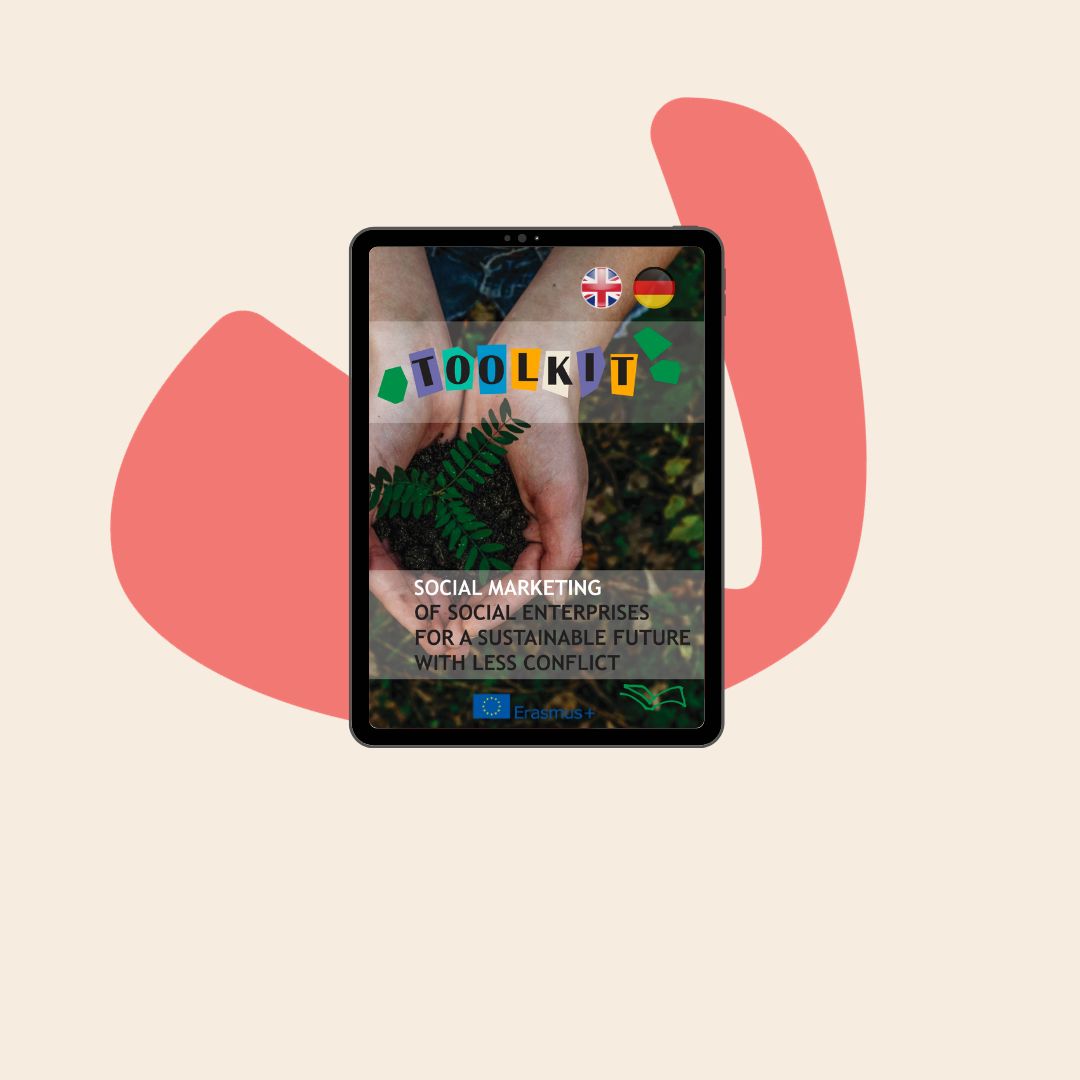
Toolkit “Social marketing of social enterprises for a sustainable future with less conflict” is a resource material for both youth workers who will further work directly with NEET youth/women, as well as for youngsters who will start-up social enterprises and are interested in learning more about potential social marketing for those start-ups of theirs.


It comprises of two parts:


1) theoretical concepts and methodology of social marketing and using digital marketing tools for social enterprises online and offline;

2) set of at least 10 different marketing (digital) tools and methods that can be used in quality social marketing efforts.


Ressourcenmaterial „Soziales Marketing von Sozialunternehmen für eine nachhaltige Zukunft mit weniger Konflikten“ sowohl für Jugendbetreuer, die weiterhin direkt mit NEET-Jugendlichen/-Frauen arbeiten werden, als auch für Jugendliche, die Sozialunternehmen gründen und daran interessiert sind, mehr darüber zu erfahren potenzielles soziales Marketing für ihre Start-ups. Es wird besteht aus zwei Teilen:


1) theoretische Konzepte und Methodik des sozialen Marketings und der Nutzung digitaler Marketinginstrumente für soziale Unternehmen online und offline;
2) eine Reihe von 10 verschiedenen (digitalen) Marketing-Tools und -Methoden, die für qualitativ hochwertige Social-Marketing-Bemühungen verwendet werden können

Share this post

Facebook
Twitter
LinkedIn

Curriculum: Social entrepreneurship youth work for a sustainable future with less conflict

Curriculum: Social entrepreneurship youth work for a sustainable future with less conflict

Description

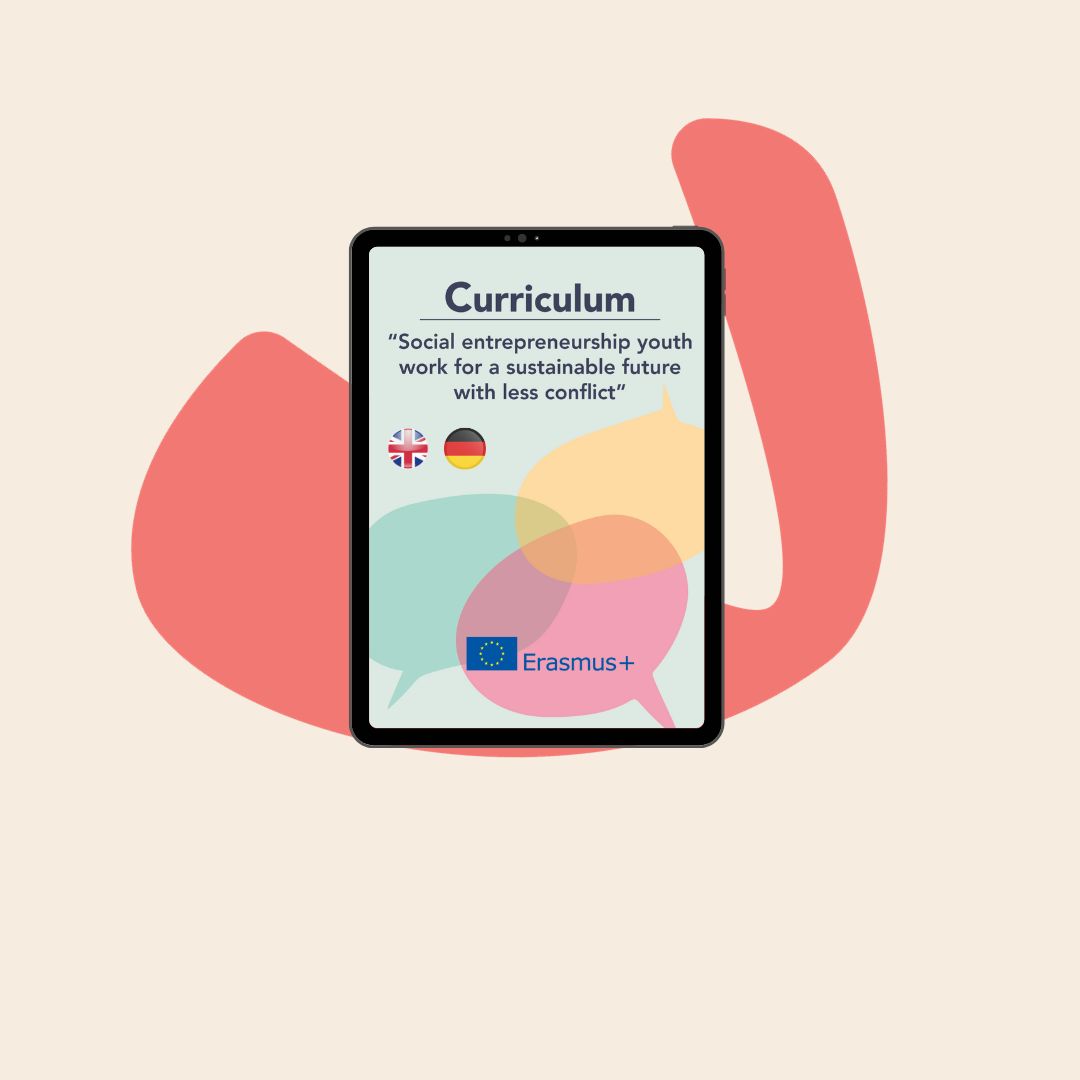
The Curriculum “Social entrepreneurship youth work for a sustainable future with less conflict” is an innovative resource for youth trainers / educators to organise an 8-day long training course and educate youth workers (current and future ones) to further develop organisational culture, mentoring and workshops for NEET youth / women on the topic of social entrepreneurship start-ups for sustainable development and peace building. It consists of detailed session descriptions.


Specific objectives of the training course are:


▪ To exchange local realities about social entrepreneurship for sustainable development and peace building;

▪ To explore peace building and sustainable development and how to connect it to youth work;

▪ To introduce the participants with the basic principles of non-formal education and its implementation in youth work;

▪ To learn about the Entrepreneurial learning and how to implement it within the framework of youth work;

▪ To understand the concept of the new era entrepreneurship and what that means for the youth workers and educators;

▪ To raise awareness of the importance of developing entrepreneurial intelligence and mind-set among youth;

▪ To learn about social, ethical and green enterprises;

▪ To learn about social entrepreneurship n connection to sustainable development and peace building;

▪ To learn about good practices of using social entrepreneurship for sustainable development and peace-building;

▪ To understand who is a social entrepreneur and which competences he/she should develop;

▪ To define basic concepts and values with defining stakeholders and supporters of social entrepreneurship;

▪ To develop workshops on the topic of social entrepreneurship for youth work activities and programmes.


The training course is based on the principles and methods of non-formal education. It consists of interactive methods to meet the learning needs of the participants including: theoretical input; individual / group activities; group challenges, presentations, role play; case studies; discussions; etc.


„Jugendarbeit für soziales Unternehmertum für eine nachhaltige Zukunft mit weniger Konflikten“ – innovative Ressource für Jugendtrainer zur Organisation eines 7-tägigen Schulungskurses und Jugendarbeiter (aktuelle und zukünftige) ausbilden, um die Organisationskultur, Mentoring und Workshops für NEET-Jugendliche (Frauen) zum Thema Soziales weiterzuentwickeln unternehmerische Start-ups. Es wird aus detaillierten Sitzungsdesigns sowie Anhängen und anderen erforderlichen Materialien für einfachere Multiplikationszwecke bestehen.


Es wird das Bestehende bereichern Ausbildungsmodelle und Lehrpläne für die Jugendarbeit mit innovativen Online-Aktivitätsmöglichkeiten für die Jugendarbeit innerhalb des Themas.


Share this post

Facebook
Twitter
LinkedIn

Booklet: Youth Art Movement

Booklet: Youth Art Movement

Youth Art Movement

Project background and project ideas came from young volunteers. The volunteers who came up with the idea of this project were part of the TC and discussed together with the other young people about the state of art and contemporary art in their countries and concluded that the state of the state’s relationship with the countryside is generally unsatisfactory.

Through this exchange, they want to work better together with other young people, and to do their best to promote contemporary art as a new way of working with young people, and thus to raise awareness of culture in local communities.


Trough Project “YouthArtMovement” we made cooperation between Young people from European Union Countries and Balkans countries. We as all Europe countries are in charge to provide example of good cooperation between other counries. Participants were involved in a process of 13 working and 1 travelling day, during the period of exchange. Since the project includes people from different cultures and social groups having the artistic and creative activity the tool for this integration and new methods for Youth workers in their organisations.


The project contributed establishing youth co-operation and launching a new Youth Art Movement project aimed at promoting culture among young people and other members of their cities. Infront of you is a booklat showing one of the outputs of the project – the performance named “When I crossed the garden”

Share this post

Facebook
Twitter
LinkedIn

TOOLKIT: Adventure room methodology in adult education for entrepreneurship 

TOOLKIT: Adventure room methodology in adult education for entrepreneurship 

Description

Toolkit “Adventure room methodology in adult education for entrepreneurship” is envisioned as a resource material for adult educators who will further work directly with citizens on their entrepreneurial mind-set development. As the competences of creativity and innovation (for entrepreneurship) are the most important and difficult to develop, we believe that it is needed to approach it creatively and innovatively. Thus, in this O4 Toolkit, we are exploring the methodology of Adventure Rooms for development of creativity and innovation in entrepreneurship adult education among our beneficiaries. This connection of Adventure rooms methodology and education is fully innovative and has not been explored yet. Adventure rooms are live-action, team-based games where players discover clues, solve puzzles, and accomplish tasks in one or more rooms in order to accomplish a specific goal in a limited amount of time.


Because the contents of profitable adventure rooms are, by nature, kept a secret and it is a highly competitive marketplace, there are not resources publicly available to help those wanting to start or improve an adventure room. This is probable why the methodology of adventure rooms was also not explored earlier within adult education field, as there were no recommendations how to do it. Thus, this toolkit of is innovative and represents the first step towards using adventure rooms methodology in adult education work of ours.


The toolkit comprises of two parts:


First part covers theoretical concepts and methodology of Adventure rooms with recommendations on using such methodology in adult NFE education when developing entrepreneurial culture in organisations/institutions and when organising quality adult education activities for entrepreneurship of citizens, and so on. This part is also focused on how adult education institution premises can be used for efficient and effective Escape/Adventure Rooms in adult education for entrepreneurship.


The second part comprises of practical examples related to the organisation of Escape/Adventure Rooms in adult educations. More precisely, this part consists of one detailed example of Escape/Adventure Rooms for development of entrepreneurial mind-set and intelligence of our beneficiaries and that are easy to multiply for future adult educators. Furthermore, the second part consists of a set of workshops and respective education support materials for organising / multiplying such adventure room in entrepreneurship adult NFE education for unemployed citizens in our communities with the aim to improve their entrepreneurial intelligence and mind-set.


Share this post

Facebook
Twitter
LinkedIn

Guidebook with Curriculum: Using creative methods for development of innovation and creativity Skills for entrepreneurship of adults with low basic skills

Guidebook with Curriculum: Using creative methods for development of innovation and creativity Skills for entrepreneurship of adults with low basic skills

Description

This educational material is innovative resource for trainers/coordinators to educate, support and mentor adult educators (current and future ones) to further develop (online and offline) organisational culture, mentoring and education/workshops/courses for unemployed citizens and beneficiaries in our communities on the topic of creativity and innovation in entrepreneurship. It comprises of 2 parts.


First, more general, part cover concepts and recommendations related to the relevant competences and adult NFE principles of adult educators for working with such beneficiaries and on these topics.


The second part is the curriculum, created as a quality – innovative training model and have 15 practical activities which are easy to multiply and also includes the needed Handouts and resources for easiest multiplication purposes.


Share this post

Facebook
Twitter
LinkedIn

Handbook: Entrepreneurial Mind-set development within adult education

Handbook: Entrepreneurial Mind-set development within adult education

Description

This hanbook is envisioned as innovative publication with relevant topics useful for development of entrepreneurial mind-set of our beneficiaries, unemployed citizens with fewer opportunities background.
 
The publication brings all up-to-date findings and descriptions of different core domains, characteristics, behaviours and skills (intrapersonal, interpersonal and creativity) that together form an entrepreneurial mind-set and drive action.
 
The publication serve as theoretical and conceptual resource for adult educators when organising further education, training and mentoring of citizens in changing their mind-sets and inspiring them to: recognise an otherwise overlooked opportunity, develop the confidence to take a risk, communicate their ideas clearly, and to be able to adjust to and learn from setbacks; in line with the latest developments in new era entrepreneurship.


Share this post

Facebook
Twitter
LinkedIn

Guidebook with Curriculum: Youth-sport work for acceptance of diversity and reconciliation

Guidebook with Curriculum: Youth-sport work for acceptance of diversity and reconciliation

Description

Guidebook with curriculum “Youth-sport work for acceptance of diversity and reconciliation” is based on the outcomes and outputs of the training course “Youth-sport work for acceptance of diversity and reconciliation”.


Guidebook is developed with aim for partner organizations and other interested organizations to use it for future education of additional youth workers in the given topics. Guidebook consists of two parts:


  • Guidebook with advices for youth trainers when approaching the topics of the training course in question, and
  • Curriculum of sessions useful for organizing training courses for future trainers (specific sessions’ descriptions / session outlines – based on the topics of our TCs and with detailed instructions andfurther reading material suggestions, as well as annexes for easier multiplication purposes).

Share this post

Facebook
Twitter
LinkedIn