Manual with Guidebook: Supporting aspiring young artists in our local communities through our youth activities

Manual with Guidebook: Supporting aspiring young artists in our local communities through our youth activities

Description

This Manual is a response to one of the needs of the cultural and creative sector: raising competences of dancers and art performers in developing and delivering educational events/activities for themselves and their peers, in order to empower them to take an active approach to solving the problems they face as artists.


The Manual is focused on the following topics:


  • Realities of the current situation regarding young and inspiring artists in our countries.
  • Values, principles and purpose of youth work
  • Purpose of art and why it matters today and in new circumstances
  • Exploring the links between youth work and youth arts
  • How youth organisations can support local emerging dance artists and art performers
  • Designing educational events and elements of educational events
  • Learning styles
  • Digital learning
  • Developing educational youth work activities for artists.


Share this post

Facebook
Twitter
LinkedIn

TOOLKIT: Adventure rooms in youth work for inclusion of immigrants

TOOLKIT: Adventure rooms in youth work for inclusion of immigrants

Description

The Toolkit “Adventure rooms in youth work for inclusion of immigrants” is envisioned as innovative resource material for youth workers who will further work directly with youngsters on their inclusion and acceptance competences. The content of this toolkit brings new poorly-explored education methodology in youth work when working with mainstream and marginalised youngsters. Knowing the fact that this target group is not much involved in youth work programmes, the toolkit is designed to include attractive and interactive methods to promote their inclusion and attract their interest to youth work programmes.


This toolkit uses the methodology of adventure rooms for the inclusion of immigrants as this methodology consists of active participation of youngsters and development of various skills. Most importantly, this methodology is very innovative and not much explored in the youth work and educational programmes.


Adventure rooms are live-action, team-based games where players discover clues, solve puzzles, and
accomplish tasks in one or more rooms in order to accomplish a specific goal (usually find an object/file) in a limited amount of time.


This manual consists of two main parts:

  • concepts and recommendations, and practical examples of activities
  • workshops followed by provision of useful sources for easier multiplication of practical activities in youth work for inclusion of immigrants.

This manual is available in 4 more Languages:

This project was response to the needs of our youngsters (mainstream and marginalised) and youth workers. We notice that there was need for innovative youth work approach towards youngsters that spend a lot of their time online and do not visit (local) youth centres/clubs so much, any more. As well, on the other hand youth workers needed upgrade in their daily life work.


Thus, we believe that the youth work approach towards the inclusion and active citizenship should also be thought again and adapted with digitalisation and other innovative aspects that are standard in everyday life of youngsters (mainstream and marginalised) nowadays.

Von der Europäischen Union finanziert. Die geäußerten Ansichten und Meinungen entsprechen jedoch ausschließlich denen des Autors bzw. der Autoren und spiegeln nicht zwingend die der Europäischen Union oder der Europäischen Exekutivagentur für Bildung und Kultur (EACEA) wider. Weder die Europäische Union noch die EACEA können dafür verantwortlich gemacht werden.


Funded by the European Union. Views and opinions expressed are however those of the author(s) only and do not necessarily reflect those of the European Union or the European Education and Culture Executive Agency (EACEA). Neither the European Union nor EACEA can be held responsible for them.

Share this post

Facebook
Twitter
LinkedIn

HANDBOOK: “Online youth work for inclusion of immigrants”

HANDBOOK: “Online youth work for inclusion of immigrants”

Description

The publication brings all the up-to-date issues and topics needed for youth workers read/get to know when starting online youth work with their beneficiaries.


The publication will also serve as theoretical and conceptual resource for youth workers and other educators when organising further education, training and mentoring of youth workers in changing their mind-sets (blockages towards online youth work) and inspiring them for reaching youngsters online when working on inclusion of immigrants.

Youth work incorporates both informal and non-formal learning, but today, we have to move those two types of learning in an online environment to reach youth who are rather spending their free time online, than in our youth clubs.


Our Handbook explores the benefits of social media (form of informal online learning) in youth work, as well as the methods and activities youth workers can use to engage youth, both in informal learning, as well as in non-formal online learning setting. Social media is a very powerful tool for connection and communication, but it is also a form of informal online learning.

This manual is available in 4 more Languages:

This project was response to the needs of our youngsters (mainstream and marginalised) and youth workers. We notice that there was need for innovative youth work approach towards youngsters that spend a lot of their time online and do not visit (local) youth centres/clubs so much, any more. As well, on the other hand youth workers needed upgrade in their daily life work.


Thus, we believe that the youth work approach towards the inclusion and active citizenship should also be thought again and adapted with digitalisation and other innovative aspects that are standard in everyday life of youngsters (mainstream and marginalised) nowadays.

Von der Europäischen Union finanziert. Die geäußerten Ansichten und Meinungen entsprechen jedoch ausschließlich denen des Autors bzw. der Autoren und spiegeln nicht zwingend die der Europäischen Union oder der Europäischen Exekutivagentur für Bildung und Kultur (EACEA) wider. Weder die Europäische Union noch die EACEA können dafür verantwortlich gemacht werden.


Funded by the European Union. Views and opinions expressed are however those of the author(s) only and do not necessarily reflect those of the European Union or the European Education and Culture Executive Agency (EACEA). Neither the European Union nor EACEA can be held responsible for them.

Share this post

Facebook
Twitter
LinkedIn

CURRICULUM: “Gamification in youth work for inclusion of immigrants”

CURRICULUM: “Gamification in youth work for inclusion of immigrants”

Description

The curriculum “Gamification in Youth Work for the Inclusion of Immigrants” is a forward-thinking educational tool created for youth workers and trainers involved in programs focused on immigrant inclusion.


Structured as a comprehensive 7-day training course, it aims to equip youth professionals with the essential skills and knowledge to effectively apply gamification techniques in their work. This innovative training approach addresses the growing need to integrate gamification into youth work practices and provides practical learning tools to ensure high-quality education for youth workers.


The methods used in the curriculum are hands-on and especially effective when engaging both mainstream and marginalized young people in activities that promote the inclusion of immigrants.


This target group is not easily involved in youth work activities, but these methodologies are really appealing, and it guarantees an active participation that leads to a deeper and stronger self-improvement as well as motivation to remain active in the future. 

This manual is available in more 4 Languages:

This project was response to the needs of our youngsters (mainstream and marginalised) and youth workers. We notice that there was need for innovative youth work approach towards youngsters that spend a lot of their time online and do not visit (local) youth centres/clubs so much, any more. As well, on the other hand youth workers needed upgrade in their daily life work.


Thus, we believe that the youth work approach towards the inclusion and active citizenship should also be thought again and adapted with digitalisation and other innovative aspects that are standard in everyday life of youngsters (mainstream and marginalised) nowadays.

Von der Europäischen Union finanziert. Die geäußerten Ansichten und Meinungen entsprechen jedoch ausschließlich denen des Autors bzw. der Autoren und spiegeln nicht zwingend die der Europäischen Union oder der Europäischen Exekutivagentur für Bildung und Kultur (EACEA) wider. Weder die Europäische Union noch die EACEA können dafür verantwortlich gemacht werden.


Funded by the European Union. Views and opinions expressed are however those of the author(s) only and do not necessarily reflect those of the European Union or the European Education and Culture Executive Agency (EACEA). Neither the European Union nor EACEA can be held responsible for them.

Share this post

Facebook
Twitter
LinkedIn

TOOLKIT: Digitalisation of youth work for inclusion of immigrants

TOOLKIT: Digitalisation of youth work for inclusion of immigrants

Description

This toolkit is made for education of youth workers in general, but focusing on the practices for working with immigrants. The toolkit provides an in-depth overview of connection between inclusion, learning and digital youth work.


With the COVID-19 pandemic and technology development of late 2010s, youth work has been experiencing a fast progress toward digitalisation. Young people we aim to reach are called “digital natives” which implies their strong connection with apps, programs and virtual life. Youth work is at the “make or break” point with this generation of youth and it needs to pivot its methodology in order to make a meaningful impact.


Special focus of this toolkit is on marginalised youth, primarily immigrant youth. This toolkit is focused on helping youth workers engage with young people from migrant backgrounds in order to support social inclusion.


Within these pages, one can find explanation, suggestions and analysis for inclusion of youth from migrant background, youth work in online space, digitalisation of youth work methods and development of digital competencies.


Last part of the toolkit offers a list of different tool and apps which can be used in digitalizing youth work activities and methods, with suggestions for different activities based on digital tools.

Dieses Toolkit wurde für die Bildung der Jugendarbeiter im Allgemeinen entwickelt, basiert sich jedoch auf die Praktiken für die Arbeit mit Zuwanderern. Das Toolkit bietet einen ausführlichen Überblick über den Zusammenhang zwischen Einbeziehung, Lernen und digitaler Jugendarbeit.

Mit der COVID-19-Pandemie und der technologischen Entwicklung Ende der 2010er Jahre hat die Jugendarbeit einen schnellen Fortschritt in Richtung Digitalisierung erlebt. Junge Menschen, die wir erreichen möchten, werden als „Digital Natives“ genannt, was ihre starke Verbindung zu Apps, Programmen und dem virtuellen Leben impliziert.

Die Jugendarbeit befindet sich bei dieser Generation von Jugendlichen am „Make or Break“-Punkt und muss ihre Methodik ändern, um eine sinnvolle Wirkung zu erzielen. Ob es Ihnen gefällt oder nicht, junge Menschen leben online und hier muss auch die Jugendarbeit stattfinden.

This manual is available in 3 more languages:

This project was response to the needs of our youngsters (mainstream and marginalised) and youth workers. We notice that there was need for innovative youth work approach towards youngsters that spend a lot of their time online and do not visit (local) youth centres/clubs so much, any more. As well, on the other hand youth workers needed upgrade in their daily life work.


Thus, we believe that the youth work approach towards the inclusion and active citizenship should also be thought again and adapted with digitalisation and other innovative aspects that are standard in everyday life of youngsters (mainstream and marginalised) nowadays.

Von der Europäischen Union finanziert. Die geäußerten Ansichten und Meinungen entsprechen jedoch ausschließlich denen des Autors bzw. der Autoren und spiegeln nicht zwingend die der Europäischen Union oder der Europäischen Exekutivagentur für Bildung und Kultur (EACEA) wider. Weder die Europäische Union noch die EACEA können dafür verantwortlich gemacht werden.


Funded by the European Union. Views and opinions expressed are however those of the author(s) only and do not necessarily reflect those of the European Union or the European Education and Culture Executive Agency (EACEA). Neither the European Union nor EACEA can be held responsible for them.

Share this post

Facebook
Twitter
LinkedIn

TOOLKIT: Mentoring and supporting youngsters for digital entrepreneurship start-up 

TOOLKIT: Mentoring and supporting youngsters for digital entrepreneurship start-up 

Description

This toolkit is a unique resource, as it consists of different elements that can help you in better transferring the knowledge on digital start-ups to youth. The aim of the toolkit is to provide you with a tool that you can use in your everyday work with youngsters in your organisations.

The toolkit consists of two important parts. In the first part, you will find concepts and recommendations on developing entrepreneurial culture in youth work organisations and organising quality non-formal educational activities for (digital) entrepreneurship of youngsters.


In this part, you can find hands-on recommendations related to creating entrepreneurial friendly surrounding and some information related to competences of youngsters. The second part of the of the toolkit compromises of 20 workshops and respective education support materials for organising youth work / NFE activities for unemployed youngsters in our communities with the aim to improve their competences and motivation for digital entrepreneurship start-up. We are covering exciting topics, such as digital entrepreneurship, digital skills, customer relationship management, photography and risk assessment and risk management. All of the covered topics are innovative and are something new in the youth work surroundings.


This Toolkit is complementary to already existing materials produced within the same project, which include Handbook “Digital Entrepreneurship Start-up” and Curriculum “Empowering youth workers to encourage digital entrepreneurship start-ups among youngsters”. In the handbook, you can find theoretical concepts and other information related to digital entrepreneurship start-ups and is an important help to better implement this toolkit. We certainly recommend you to read it before diving in this topic.


In the end, we hope this toolkit will help in quality improvement of knowledge management in youth (work) organisations, as that it will allow easy and quality multiplication of knowledge and practices on how to inspire, train and mentor youngsters for digital entrepreneurship start-up.


Beschreibung

Dieses Toolkit ist eine einzigartige Ressource, weil es aus verschiedenen Elementen besteht, die Ihnen helfen können, das Wissen über digitale Start-ups besser an Jugendlichen weiterzugeben. Ziel des Toolkits ist es, Ihnen ein Werkzeug an die Hand zu geben, das Sie in Ihrer alltäglichen Arbeit mit Jugendlichen in Ihren Organisationen einsetzen können.


Das Toolkit hat zwei wichtigen Teile. Im ersten Teil finden Sie Konzepte und Empfehlungen zur Entwicklung einer Unternehmenskultur in Organisationen der Jugendarbeit und zur Organisation hochwertiger nicht-formaler Bildungsaktivitäten für (digitales) Unternehmertum von Jugendlichen. In diesem Teil finden Sie praktische Empfehlungen zur Schaffung eines unternehmensfreundlichen Umfelds und einige Informationen zu en Kompetenzen junger Menschen. Der zweite Teil des Toolkits hat 20 Workshops und entsprechenden bildungsunterstützenden Materialien für die Organisation der Jugendarbeit / NFE-Aktivitäten für arbeitslose Jugendliche in unseren Gemeinden mit dem Ziel, ihre Kompetenzen und Motivation für die Gründung des digitalen Unternehmertums zu verbessern. Wir behandeln spannende Themen wie digitales Unternehmertum, digitale Fähigkeiten, Fotografie sowie Risikobewertung und Risikomanagement. Alle behandelten Themen sind innovativ und neu im Umfeld der Jugendarbeit.


Dieses Toolkit ergänzt schon vorhandene Materialien, die im Rahmen desselben Projekts erstellt wurden, darunter das Handbuch “Digitales Start-up Unternehmertum” und das Curriculum „Stärkung der Jugendarbeiter, um digitales Start-up Unternehmertum unter jungen Menschen zu fördern“. Das Handbuch beinhaltet theoretische Konzepte und weitere Informationen rund um das Thema digitales Start-up Unternehmertum und ist eine wichtige Hilfestellung, um dieses Toolkit besser umzusetzen. Wir empfehlen Ihnen auf jeden Fall, es zu lesen, bevor Sie in dieses Thema einsteigen.


Am Ende hoffen wir, dass dieses Toolkit zur Qualitätsverbesserung des Wissensmanagements in Jugend(arbeits-)organisationen beitragen wird, weil es eine einfache und qualitativ hochwertige Multiplikation von Wissen und Praktiken ermöglicht, wie junge Menschen für den Start des digitalen Unternehmertums inspiriert, ausgebildet und betreut werden können.

Share this post

Facebook
Twitter
LinkedIn

CURRICULUM for the Training Course: Empowering youth workers to encourage digital entrepreneurship start-ups among youngsters 

CURRICULUM for the Training Course: Empowering youth workers to encourage digital entrepreneurship start-ups among youngsters 

Description

This curriculum can be viewed as a tool for all interested youth trainers and it serves as a quality improvement of knowledge management in youth (work) organisations, as it allows for easy and quality multiplication of knowledge and practices described and for future education and empowerment of youth workers interested in organising/doing digital entrepreneurship education of youngsters (mainstream and with fewer opportunities) in our communities.


Specific objectives of the training course are:


  • To introduce the participants with the basic principles of non-formal education (including differences between formal, non-formal and informal learning, learning styles and its impact on NFE);
  • To reflect on the theoretical framework of Entrepreneurial learning (EL) – what it is, why it is used, and the existing models of it, as well as to inspire each other on how different models of EL can be implemented in youth work for raising competences of youngsters;
  • To understand the concept of new entrepreneurship, and to reflect on individual and organisational competencies and capabilities needed to support quality education / youth work to educate young people for new era entrepreneurship;
  • To introduce ICT and digital entrepreneurship to participants;
  • To visualise the opportunities digital revolution is creating for enterprises in the future;
  • To introduce the concept of a digital company to participants;
  • To provide participants’ tools to start a digital company;
  • To experience challenges and benefits of digital workplace and learn from it;
  • To understand which competences digital entrepreneur needs to have in a framework of a SKA model (skills, knowledge, attitudes) and how youth work can help build relevant (soft)skills for working in a digital workplace and entrepreneurship;
  • To introduce the concept of digital marketing and its benefits;
  • To detect the competitive advantage(s) of a digital company;
  • To learn about content marketing and understand the importance of creating content for digital companies;
  • To introduce different tools, methods, services and forms of Advertising in digital marketing;
  • To investigate about online / digital marketing and its importance for digital start-ups;
  • To get familiar with different social networks / media tools for digital start-ups to maximise their social media results;
  • To learn about visual presentation in digital marketing and understand the importance of carefully choosing visual content and using photography as a tool in online campaigning;
  • To develop NFE / youth work workshops related to the topic which can be in local youth work.


The training course is based on the approach, principles and methods of non-formal education. It consists of interactive and participatory methods tailored to the participants’ profile and needs, some of them being: theoretical themes and lectures; individual/group activities; group games and exercises, simulations and role plays; work on examples in a small group; discussions; etc.


Beschreibung

Dieser Lehrplan “Befähigung der Jugendarbeiter zur Förderung von Start-ups für digitales Unternehmertum bei Jugendlichen” wurde zum Zweck der Verbreitung und damit zur Ausweitung der Auswirkungen unseres Projekts auf andere Partnerorganisationen und andere Jugend- und ähnliche Organisationen sowie deren Koordinatoren, Jugendarbeiter, Jugendliche und Erzieher erstellt – um das Wissensmanagement und den Kapazitätsaufbau ihrer Jugendarbeiter weiter zu verbessern und damit die systematische Unterstützung der Jugend in den lokalen Gemeinschaften zu erhöhen.


Dieser Lehrplan ist ein Ressourcenmaterial für alle, die sich für das Thema Start-ups im Bereich des digitalen Unternehmertums interessieren. Es ist vor allem nützlich für Jugendarbeiter, die in einer Organisation arbeiten, sowie für Freiwillige, die Workshops durchführen möchten. Dieser Lehrplan ist ebenso eine Inspiration für Auszubildende in diesem Bereich, weil sie die Multiplikatoren des Wissens sein können, besonders wenn ähnliche Schulungskurse auf lokaler und europäischer Ebene organisiert werden.


Wenn Sie diesen Lehrplan zur Organisation eines Kurses benutzen, möchten wir, dass die Teilnehmer ihre Kenntnisse, Fähigkeiten und Einstellungen im Bereich des digitalen Unternehmertums und anderer relevanter Fähigkeiten entwickeln. Besonders sind Kompetenzen, die wir entwickeln möchten, folgende:


  • Kompetenzen in Bezug auf die Hauptprinzipien der nicht formalen Bildung (einschließlich der Unterschiede zwischen formalem, nicht formalem und informellem Lernen, Lernstillen und deren Auswirkungen auf NFE).
  • Kenntnis des theoretischen Rahmens des unternehmerischen Lernens (EL) – was es ist, wieso er benutzt wird
  • Verständnis des Konzepts des neuen Unternehmertums und Reflexion über individuelle und organisatorische Kompetenzen und Fähigkeiten, die zur Unterstützung einer qualitativen hochwertigen Bildung / Jugendarbeit nötig sind, um junge Menschen für das Unternehmertum der neuen Ära auszubilden.
  • Kenntnisse und Bewusstsein für ICT, digitales Unternehmertum, digitale Unternehmen und digitale Arbeitsplätze.
  • Verständnis der Kompetenzen, die ein digitaler Unternehmer im Rahmen eines SKA-Modells (Fähigkeiten, Kenntnisse, Einstellungen) haben muss, und wie Jugendarbeit dazu beitragen kann, relevante (weiche) Fähigkeiten für die Arbeit an einem digitalen Arbeitsplatz und für das Unternehmertum aufzubauen.
  • Kenntnis und Verständnis über das digitale Marketing, die Wettbewerbsvorteile eines digitalen Marketings und Content-Marketing.
  • Kenntnis und Verständnis verschiedener Werkzeuge, Methoden, Dienstleistungen und Werbeformen im digitalen Marketing sowie im Online- / Digital-Kampagnenbereich.
  • Kenntnis und Verständnis verschiedener sozialer Netzwerke / Medienwerkzeuge für digitale Start-ups zur Maximierung ihrer Social-Media-Ergebnisse.
  • Kenntnis und Verständnis der visuellen Präsentation im digitalen Marketing, der Fotografie im Bereich des digitalen Unternehmertums und der Online-Kampagnen sowie der Gebühren für die Fotografie und der Gelegenheiten für neue Medien für digitale Unternehmen.
  • Kenntnis und Verständnis darüber, wie die Schulungen und Workshops mit lokalen Jugendlichen angewendet werden können, um sie bei der Gründung digitaler Unternehmen zu helfen.
  •  

Die Liste der Kompetenzen, die die Teilnehmer entwickeln werden, wird in jeder Sitzung getrennt notiert. Das heißt, dass man beim Lesen des Aktivitätsvorschlags am Anfang sehen kann, welcher Kompetenzbereich von diesem Programm entwickelt wird.

Im Allgemeinen entspricht dieser Kurs der Verbesserung der Kommunikationsfähigkeiten, Führungsqualitäten, Teamfähigkeit, digitalen Fähigkeiten und anderen Fähigkeiten, die für Start-ups im Bereich des digitalen Unternehmertums relevant sind. Das wird den Teilnehmern schließlich helfen, sich selbst und andere zu verstehen und Jugendliche bei der Gründung digitaler Unternehmen zu unterstützen.


Um einen qualitativ hochwertigen Kurs auf der Grundlage dieses Lehrplans zu organisieren und die gewünschten Lernziele zu schaffen, die in jeder der in diesem Lehrplan beschriebenen Sitzung dargestellt wurden, empfehlen wir Ihnen, eine qualitativ hochwertige Lernumgebung für die Teilnehmer sicherzustellen. Das muss in mehreren Schritten erfolgen.

Share this post

Facebook
Twitter
LinkedIn

HANDBOOK: Digital Entrepreneurship Start-up

HANDBOOK: Digital Entrepreneurship Start-up

Description

In this handbook, we are trying to explain what digital entrepreneurship is and what steps one should take in order to start a successful digital enterprise. It is important to understand that digital world is constantly changing and shifting, so the sector of digital entrepreneurship is constantly changing – as well. For that reason, before following all the steps and advices presented in this material and reading the whole material, it’s important to do parallel searching for newest information – if one wants to be 100% sure that his/her initial digital enterprise will hit the sky.


In the first part of the handbook, we are presenting basic information on what is digital entrepreneurship – from practical and theoretical side of view. Following that are necessary basic skills and know-hows for starting a digital enterprise. We explain how entrepreneurial competencies are divided into cognitive, social and action oriented skills/attitudes, but we also offer overview of different practical skills digital entrepreneur should have and develop.

After offering some theoretical and practical insights into what digital entrepreneurship is, we are starting to explain two different alternatives when it comes to digital entrepreneurship: self-hosted digital business (in this section we explain what it is, and what are the important things you should pay attention to, what are some useful tools and which different platforms you can use, if you decide to have your digital enterprise in a form of self-hostel digital business) and externally-hosted digital business (section in which we present some of the most popular options you can choose from).


Chapters following these two sections of the handbook, which are helpful for understanding basic of digital enterprise and how to start it, are concentrated around the practical topics you need to know about if you want to minimise chances of running not that successful digital enterprise. We are presenting market assessment, selecting the right sales channel, digital strategy, photography and practical tools and advices concerned around the topic which can be used in digital enterprises, medias you can use for promoting and developing your business, shipping options, digital marketing, digital workplace.


Beschreibung

In diesem Handbuch versuchen wir zu erklären, was digitales Unternehmertum ist und welche Schritte man unternehmen sollte, um ein erfolgreiches digitales Unternehmen zu gründen. Es ist wichtig zu verstehen, dass sich die digitale Welt ständig ändert, daher ändert sich auch der Sektor des digitalen Unternehmertums ständig. Aus diesem Grund ist es wichtig, parallel nach den neuesten Informationen zu suchen, bevor Sie alle in diesem Material vorgestellten Schritte und Ratschläge befolgen und das gesamte Material lesen – wenn Sie zu 100% sicher sein möchten, dass sein ursprüngliches digitales Unternehmen den Himmel erreicht.


Im ersten Teil des Handbuchs präsentieren wir grundlegende Informationen zum Thema digitales Unternehmertum – aus praktischer und theoretischer Sicht. Daran schließen sich benötigte Grundkenntnisse und Know-how an, um ein digitales Unternehmen zu gründen. Wir erklären, wie unternehmerische Kompetenzen in kognitive, soziale und handlungsorientierte Fähigkeiten/ Einstellungen unterteilt werden, bieten auch einen Überblick über unterschiedliche praktische Fähigkeiten, die digitale Unternehmer haben und entwickeln sollten.


Nachdem wir einige theoretische und praktische Einblicke in das digitale Unternehmertum gegeben haben, fangen wir an, zwei verschiedene Alternativen für digitales Unternehmertum zu erläutern: selbstgehaltenes digitales Geschäft (in diesem Abschnitt erklären wir, was das ist und worauf Sie achten sollten, welche nützlichen Tools und welche verschiedenen Plattformen Sie verwenden können, wenn Sie sich für ein digitales Unternehmen in Form eines selbstgehaltenen Digitalgeschäfts und eines extern gehaltenen Digitalgeschäfts entscheiden (Abschnitt, in dem wir einige davon vorstellen) die beliebtesten Optionen, aus denen Sie auswählen können).


Die Kapitel, die diesen beiden Abschnitten des Handbuchs folgen und hilfreich sind, um die Grundlagen des digitalen Unternehmens zu verstehen und anzufangen, konzentrieren sich auf die praktischen Themen, die Sie kennen müssen, wenn Sie die Chancen minimieren möchten, nicht so erfolgreiches digitales Unternehmen zu betreiben. Wir präsentieren Markteinschätzungen, die Auswahl des richtigen Vertriebskanals, der digitalen Strategie, der Fotografie sowie praktische Tools und Ratschläge zum Thema, die in digitalen Unternehmen benutzt werden können. Sie können Medien für die Förderung und Entwicklung Ihres Geschäftes, Versandoptionen, digitales Marketing und digitalen Arbeitsplatz verwenden.


Der letzte Teil des Handbuchs basiert sich auf Ideen des Kundenbeziehungsmanagements, der Risikobewertung und des Risikomanagements, der Finanzplanung und der Entwicklung der Geschäftspläne. Das sind einige der Grundlagen, die richtig geschaffen werden müssen, um Ihr digitales Start-up zu einem erfolgreichen digitalen Unternehmen zu entwickeln. Das ist wiederum ein gutes Argument für die Aussage, die wir zu Beginn der Einleitung geschrieben haben: Sie sollen das ganze Material durchlesen und gleichzeitig über aktuelle Informationen zu verschiedenen Themen des Handbuchs recherchieren – um das richtig zu machen, starten Sie die Entwicklung Ihres digitalen Start-ups.


Wir empfehlen, dass Sie dieses Handbuch auf eine intelligente Weise verwenden, und hoffen, dass es für Sie nützlich wird. Entweder wenn Sie ein junger Mensch sind, der entschlossen ist, sein erstes digitales Unternehmen zu gründen, oder wenn Sie ein Pädagoge sind, der junge Menschen dazu inspiriert, etwas über digitales Unternehmertum zu lernen. Wir hoffen auch, dass dieses Handbuch einer der ersten Schritte sein wird, um mehr digitale Unternehmer in Europa und auf der ganzen Welt zu haben.


 

Share this post

Facebook
Twitter
LinkedIn

CURRICULUM: “Training youth workers and sport trainers in using sport methodology for inclusion and interaction of different abilities’ youngsters”

CURRICULUM: “Training youth workers and sport trainers in using sport methodology for inclusion and interaction of different abilities’ youngsters”

Description

The curriculum “Training youth workers and sport trainers in using sport methodology for inclusion and interaction of different abilities’ youngsters” is an innovative resource for youth trainers and sport coordinators with the purpose to educate, support and mentor youth workers and sport trainers in using sport methodology in youth work with mainstream youngsters and the ones with disabilities, for inclusion and interaction of theirs in their community. The content of the curriculum consists of introductory parts, training programme table with division of sessions for each working day including morning and afternoon sessions’ division.


Every presented developed session provides a thorough description of the background related with the topic, the aim and set of objectives of the session, methodology and methods, and detailed session flow with measured approximate duration. The structure of each session includes potential recommendations, further resources for reading and materials needed for the implementation. That is, for the purpose of providing a practical resource for the current and future youth workers and sport trainers engaged in youth sport work.


The importance of the curriculum stands in the innovative element of covering the existing need for adaptation of sport methodology through youth work, as well as the needed learning tools to support a quality education of sport trainers and youth workers for using sport methodology with different abilities’ youngsters.

This manual is available in more 4 Languages:

Project “Overcoming the limiting realities creatively: Sport methodology in youth work for inclusion” is trying to put the above-mentioned needs and EU Guidelines/policies into action by developing new curricula and methods for empowering both youth (work) organisations, as well as the sport organisations – to increase their capacity building and human resources for quality envisioning and promoting the physical activity events (youth sport work and sport events) that thus contribute to increasing participation in quality sports by more youngsters, and especially by children and youngsters with disabilities.

Von der Europäischen Union finanziert. Die geäußerten Ansichten und Meinungen entsprechen jedoch ausschließlich denen des Autors bzw. der Autoren und spiegeln nicht zwingend die der Europäischen Union oder der Europäischen Exekutivagentur für Bildung und Kultur (EACEA) wider. Weder die Europäische Union noch die EACEA können dafür verantwortlich gemacht werden.


Funded by the European Union. Views and opinions expressed are however those of the author(s) only and do not necessarily reflect those of the European Union or the European Education and Culture Executive Agency (EACEA). Neither the European Union nor EACEA can be held responsible for them.

Share this post

Facebook
Twitter
LinkedIn

GUIDEBOOK: Using NFE and sport methodology for inclusion of youngsters with disability

GUIDEBOOK: Using NFE and sport methodology for inclusion of youngsters with disability

Description

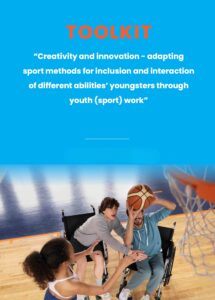
This Guidebook “Using NFE and sport methodology for inclusion of youngsters with disabilities” is made for education of youth workers and sport coaches with the aim of including youngsters with disabilities into their everyday activities using sport as a method and a tool. It serves as a basis for quality knowledge management and future capacity building of organisations which work with youth, including nongovernmental organisation, governmental institutions and sport clubs. The guidebook provides an in-depth overview of all the topics relevant to inclusion in sport – non-formal education, sport methodology, disability and recommendations formethodology.


It provides the explanation of the basic terminology which will be used throughout the text. The focus then changes to sport methodology from a general perspective. This chapter provides introduction to sports training and session planning. Inclusive space chapter offers practical advices on how to enable equal participation by adapting the space, equipment and the attitude toward inclusion. Adaptedphysical activity is proven to be highly effective when working with participants with disability, so this chaptergives a detailed overview of models, types and exercises for this methodology.


As we are aware of the benefits of physical movement, youth work and sport help develop a wide range of competences – social, lingual, cultural, etc. We further analyse aims and objectives of working with youth and we explain how sport youth work can improve different competences of its beneficiaries of different abilities.

Beschreibung

Dieses Handbuch „Nutzung von NFA und Sportmethoden zur Einbeziehung der Jugendlichen mit Behinderungen“ dient der Ausbildung der Jugendarbeiter und Sporttrainer mit dem Ziel, Jugendliche mit Behinderungen in ihre alltäglichen Aktivitäten einzubeziehen, wobei Sport als Methode und Werkzeug genutzt wird. Es dient ebenso als Grundlage für ein qualitatives Wissensmanagement und den künftigen Kapazitätsaufbau der Organisationen, die mit Jugendlichen zusammenarbeiten,einschließlich Nichtregierungsorganisationen, Regierungsinstitutionen und Sportvereinen. Der Leitfaden bietet einen detaillierten Überblick über alle für die Einbeziehung in den Sport relevanten Themen – nicht formale Bildung, Sportmethodik, Behinderung und Empfehlungen für die Methodik.


Der Anfang der Broschüre beinhaltet die Erläuterung der wesentlichen Terminologie, die im gesamten Text genutzt wird. Der Fokus wechselt dann aus allgemeiner Sicht zur Sportmethodik. Dieses Kapitel bietet eine Einleitung in das Sporttraining und die Trainingsplanung.


Das Kapitel Inklusiver Raum bietet praktische Ratschläge, wie eine gleichberechtigte Teilnahme durch Anpassung des Raums, der Ausstattung und der Einstellung zur Inklusion ermöglicht werden kann. Eine angepasste körperliche Aktivität hat sich bei der Arbeit mit behinderten Teilnehmern als äußerst erfolgreich erwiesen.


Dieses Kapitel bietet also einen detaillierten Überblick über Modelle, Typen und Übungen für diese Methodik.Da wir uns der Vorteile der körperlichen Bewegung bewusst sind, tragen Jugendarbeit und Sport dazu bei, ein breites Spektrum an Kompetenzen zu entwickeln – soziale, sprachliche, kulturelle usw. Wir analysieren die Ziele der Jugendarbeit weiter und erklären, wie sich die Jugendarbeit im Sport mit unterschiedlichen Fähigkeiten verbessern kann.


Diese Broschüre beinhaltet eine Reihe praktischer Ratschläge, wie Sie mit Jugendlichen mit unterschiedlichen Fähigkeiten arbeiten, wie Sie sich als Jugend-/ Sportarbeiter, Ihre Teilnehmer und Ihre Umgebung darauf vorbereiten können, Menschen mit unterschiedlichen Bedürfnissen einzubeziehen. Es bietet eine Vorlage für einen individuellen Bildungsplan und hilft bei der Erstellung des ersten Trainingsplans für sportliche Aktivitäten

Share this post

Facebook
Twitter
LinkedIn