Guidebook with Curriculum: Large-scale and creativity youth-sport work events

Guidebook with Curriculum: Large-scale and creativity youth-sport work events

Description

Guidebook with curriculum “Large-scale and creativity youth-sport work events” is based on the outcomes and outputs of the training course “Large-scale and creativity youth-sport work events”.


Output is created for future education of additional youth workers in the given topics. Output is developed as basis for quality knowledge management and future capacity building in partner organizations, as well as other interested youth (work) organizations.


Output consists of two parts:


  1. Guidebook with advices for youth trainers when approaching the topics
  2. Curriculum of sessions useful for organizing training courses for future trainers (specific sessions’ descriptions / session outlines – based on the topics of our TCs and with detailed instructions and further reading material suggestions, as well as annexes for easier multiplication purposes).

Share this post

Facebook
Twitter
LinkedIn

Guidebook with Curriculum: Youth work contributing to reconciliation in post-conflict areas

Guidebook with Curriculum: Youth work contributing to reconciliation in post-conflict areas

Description

Guidebook with advices for youth trainers when approaching the topics of the training course in question is made for future education of additional youth workers in the topics of each TC. As we know that the fluctuation of youth workers through youth organisations is high – many just stay until they feel that they cannot gain anymore much, they search for change that brings more challenge to them and higher possibility of personal development.

Thus, these Guidebook will be basis for quality knowledge management and future capacity building in partner organisations, as well as other interested youth (work) organisations, and it will be easy for coordinators in these organisations to organise proper education of those new future youth workers that will join later.


Guidebook contains curriculum of sessions useful for organising training courses for future trainers (specific sessions’ descriptions/session outlines–based on the topics of our TCs and with detailed instructions and further reading material suggestions, as well as annexes for easier multiplication purposes).


Guidebook consist of already developed workshops that has been recognised on European level as the good practice models, and includes materials from EU CoE Youth Partnership, Council of Europe, UNESCO and many others, but also includes personal reflections of the editor and project team. Short theoretical inputs in regard to topics covered with the training are prepared mainly according to Glossary of terms at: Ohana, Y. (ed.) (2012): T-Kit Youth transforming conflict. Strasbourg: Council of Europe and European Commission.


Share this post

Facebook
Twitter
LinkedIn

Handbook: Organising creative large-scale youth sport work events

Handbook: Organising creative large-scale youth sport work events

Description

The Handbook is practical guidance on organizing large-scale youth sport work events is presented in a form of practical advice and tips from youth work practice.


The Handbook is divided into four main chapters, with examples of templates, documents and forms in appendixes. Guidebook with curriculum “Youth-sport work for acceptance of diversity and reconciliation”
More over this material include some basic theory explained. Starting with some fundamental concepts in youth work, like non-formal education and definition of youth work.


Last part of the Handbook is examples of info sheets for the youth event from practice, example of the consent form and medical document that participants should fill out, a sample of the Child and Youth Protection Policy (simplified version), template for the communication strategy and a picture used for the evaluation methods.


Share this post

Facebook
Twitter
LinkedIn

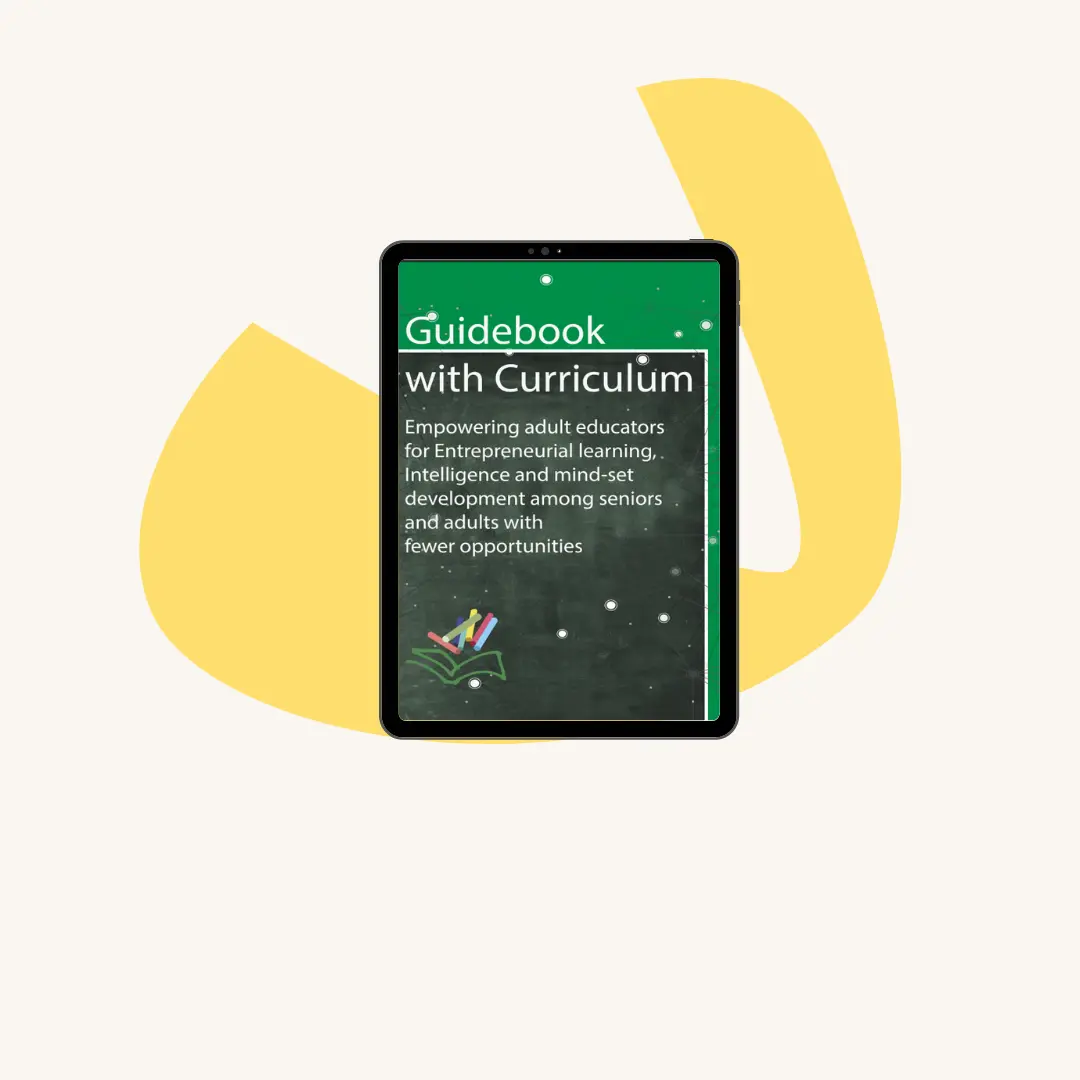
GUIDEBOOK with Curriculum: Empowering adult educators for Entrepreneurial learning, Intelligence and mind-set development among seniors and adults with fewer opportunities

GUIDEBOOK with Curriculum: Empowering adult educators for Entrepreneurial learning, Intelligence and mind-set development among seniors and adults with fewer opportunities

Description

This guidebook with curriculum is innovative resource to educate, support and mentor adult educators (current and future ones) to further develop (online and offline) organisational culture, mentoring and education for seniors and adults with fewer opportunities in our communities on topic of Entrepreneurial learning, Intelligence, and mind-set development in line with the new era entrepreneurship.


It comprises of two parts where the first part covers key concepts and recommendations of the related topics in the field of entrepreneurship for adult educators, while the second part consists of detailed development of sessions of an 8-day long training course.


The key innovation aspect of this guidebook with curriculum is in the topics covered in the field of entrepreneurship, as it focuses on the new era entrepreneurship and intrapersonal aspects of entrepreneurial mind-set. Until now, the standard educational programmes in this field focused more into business plan design. Our guidebook with curriculum is especially designed on focusing on the entrepreneurial skills development in the modern era.

This manual is available in more 5 Languages:

The motivation for this project “Entrepreneurship education for seniors and adults with fewer opportunities” was to equip seniors and adults with fewer opportunities with a set of skills needed for personal development in the areas of entrepreneurial intelligence and creating (self-)employment opportunities, proactively in today’s reality of employment insecurity and the world of extinction of many familiar jobs and occupations now and even more so in the future. This new needed capacity was entrepreneurial intelligence – a competence trained and developed through the acquisition of various skills, knowledge and attitudes through quality non-formal adult education. 

Von der Europäischen Union finanziert. Die geäußerten Ansichten und Meinungen entsprechen jedoch ausschließlich denen des Autors bzw. der Autoren und spiegeln nicht zwingend die der Europäischen Union oder der Europäischen Exekutivagentur für Bildung und Kultur (EACEA) wider. Weder die Europäische Union noch die EACEA können dafür verantwortlich gemacht werden.


Funded by the European Union. Views and opinions expressed are however those of the author(s) only and do not necessarily reflect those of the European Union or the European Education and Culture Executive Agency (EACEA). Neither the European Union nor EACEA can be held responsible for them.

Share this post

Facebook
Twitter
LinkedIn

HANDBOOK on entrepreneurial learning, intelligence and mind-set development for adults

HANDBOOK on entrepreneurial learning, intelligence and mind-set development for adults

Description

This handbook is envisioned as an innovative publication with relevant topics useful for development of entrepreneurial mind-set of seniors and adults with fewer opportunities. The publication brings all up-to-date findings and descriptions of different core domains, characteristics, behaviours and skills that together form an entrepreneurial mind-set and drive action. It serves as a resource for adult educators when organising further education, training and mentoring of beneficiaries in changing their mind-sets and inspiring new era entrepreneurship.


The handbook covers all important and necessary topics related to the involvement of seniors and adult with fewer opportunities in entrepreneurial mind-set education and skill development. It is considered to be a unique all-in-one guide developed in cooperation with highly profiled experts in the field of entrepreneurship that are engaged in the project, adult education centres/institutions, the entrepreneurial companies, organisations and hubs, together with the expert entrepreneurship educators and adult educators and psychologists. All the engaged experts, are experienced in NFE and adult education for entrepreneurship, thus bringing a combination of strong expertise in the topic.


Considering the importance of working in a dynamic world, the innovative part of this handbook consists of detailed explanation of 21st century skills in developing entrepreneurial mind-set of adults with fewer opportunities. This includes up to date information on the needs of digital skills, media and literacy skills, innovation and creativity, critical thinking, as well as non-cognitive skills lying under the entrepreneurial mind-set development for seniors and adults.


Share this post

Facebook
Twitter
LinkedIn

Curriculum: Using sport methodology in NFE and youth work for inclusion of different abilities’ youngsters” 

Curriculum: Using sport methodology in NFE and youth work for inclusion of different abilities’ youngsters” 

Description

The curriculum “Using sport methodology in NFE and youth work for inclusion of different abilities’ youngsters” is an educational resource for youth trainers and coordinators aiming to educate, support and mentor youth workers and trainers in using sport methodology in non-formal education and youth work with different abilities youngsters, for inclusion and interaction of theirs in their community.


The focus of this curriculum is initially to address the needs of its target group of youth workers who have certain experience in sport work and its methodologies as well as general NFE principles and methodology. The curriculum also addressed the needs of youngsters with disabilities and their inclusion in NFE activities related to sport work. The content of the curriculum comprises of introductory parts (summary of the project, background of the curriculum, and recommendations for future trainers organising similar training courses), detailed training programme with division of sessions for each working day (morning and afternoon structured).


The structure of developed sessions includes practical recommendations, additional resources for reading and materials needed for the implementation. This is done with the purpose of offering a more practical and useful material for youth workers and trainers/educators/peers engaged in youth work.


The specific objectives of the curriculum are:


  • To set the basis of the programme as well as create communication between participants in order to know the backgrounds and abilities of each other.
  • To share realities and experiences on inclusion on different abilities’ youngsters in our communities and explore similarities and differences between countries through research and discussion.
  • To reflect on the concepts of disability and create space for strengthening knowledge with the up-to-date terminology and practices that lead to better understanding the needs of different abilities’ youngsters.
  • To advance the knowledge of participants in youth work and NFE methodology as well as strengthen their capacities on inclusion of youngsters with disabilities through interactive exercises and presentations.
  • To understand sport methodology and its components as well as its integration in NFE inclusive activities for people with disabilities.
  • To motivate participants in creating inclusive sport activities with different abilities’ youngsters through their empowerment in the topic and exploration of historical moments and existing practices.
  • To strengthen participants’ knowledge on the mental and physical development and benefits through sport activities as well as highlight the importance of education elements’ integration for inclusive youth sport work.
  • To strengthen participants’ competences on the development of aims and objectives for future sport programmes through needs assessment of youngsters with disabilities and relevant aspects supporting their inclusion and learning.
  • To understand the importance of mutual and inclusive activities, as well as competence development for all youngsters (mainstream and with disabilities) for inclusive youth sport work programmes.
  • To learn about setting inclusive spaces and use practical methods for competence development of participants when working with young people with disabilities in their communities.
  • To reflect on and share sport methods and games/outdoor activities from local communities and find ways to adapt them when working with different abilities’ youngsters.
  • To identify potential challenges when implementing inclusive sport methods for inclusion and interaction of mixed groups of youngsters with/without disabilities and explore ways of overcoming them.
  • To create space for developing new inclusive sport activities for youngsters with/without disabilities, based on the knowledge gained in the programme.
  • To reflect on the training course and use different methods to evaluate the programme, support, and overall experience.


The curriculum and the sessions developed are based on the principles and methodology of non-formal education; this comprising of role plays, interactive games, group works, plenary discussion, individual activities, reflective exercises, theoretical input, as well as exchanging of existing realities and practices as a learning technique.


To be eligible for the training course, participants need to fulfil the following criteria:


  • Be active youth workers and trainers with education in NFE principles and methodology, (willing to get) involved in inclusive youth work activities; be willing to empower other youth workers and mainstream and marginalised youth through NFE.
  • Be able to be fully engage in the training course and for the whole duration of it.
  • Be motivated, interest and willingness for follow up actions in local level in order to multiply the gained knowledge.
  • Have willingness to create partnerships with other participants coming from different organisations and countries.
  • Be above 18 years old and have a satisfactory knowledge of English language to follow the programme.

Share this post

Facebook
Twitter
LinkedIn

Curriculum: Inclusion of different abilities’ youngsters through NFE and youth work 

Curriculum: Inclusion of different abilities’ youngsters through NFE and youth work 

Description

The curriculum “Inclusion of different abilities’ youngsters through NFE and youth work” is an innovative resource for youth trainers and coordinators aiming to educate, support and mentor youth workers and trainers in using non-formal education and youth work with different abilities youngsters, for inclusion and interaction of theirs in their community.


The focus of this curriculum is initially to address the needs of its target group of youth workers who have certain experience in general NFE principles and methodology. The curriculum also addressed the needs of youngsters with disabilities and their inclusion in NFE activities. The content of the curriculum comprises of introductory parts (summary of the project, background of the curriculum, and recommendations for future trainers organising similar training courses), detailed training programme with division of sessions for each working day (morning and afternoon structured).


The structure of developed sessions include practical recommendations, additional resources for reading and materials needed for the implementation. This is done with the purpose of offering a more practical and useful material for youth workers and trainers/educators/peers engaged in youth work.


The specific objectives of the curriculum are:


  • To establish the basis of the training’s programme and initiate the getting to know process for the participants in order to better identify the backgrounds and abilities of each other;
  • To share realities and experiences about social inclusion of young people with disabilities and their needs addressed in different countries;
  • To create a common understanding on the key concepts and terms on social inclusion of young people with disabilities and use interactive methods to further strengthen the knowledge of participants;
  • To set up the basis of understanding the concepts of formal, non-formal education and informal education, and further explore on the NFE opportunities and methods;
  • To create space for reflecting on NFE activities and adapt them for easier accessibility when working with young people with disabilities;
  • To develop participant’s competences on social inclusion of people with disabilities by providing with practical knowledge and offering simulation activities;
  • To explore positive practices in the local communities about youth work for inclusion of different abilities youngsters;
  • To give participants the space to reflect on the competences gained in the programme and use them for developing and presenting NFE inclusive workshops for different abilities youngsters in their local community;
  • To create space for simulation of developed NFE inclusive workshops and putting the knowledge gained into practice;
  • To create space for presenting and testing the developed workshops, as well as get feedback for further improvement of the work;
  • To get some insight into inter-sectoral cooperation and hopefully motivation to work on new collaboration with public institutions in such topics;
  • To use this training course as inspiration and motivation for participants to get more engaged in sending organisations and communities afterwards in the NFE and youth work for inclusion;
  • To create space for recommendations to youth workers and educators multiplying this training course in their future programmes.


The curriculum and sessions developed are based on the principles and methodology of non-formal education; this comprising of role plays, interactive games, group works, plenary discussion, individual activities, reflective exercises, theoretical input, as well as exchanging of existing realities and practices as a learning technique.


In order to be eligible for the training course, participants need to fulfil the following criteria:


  • Be active youth workers and trainers with education in NFE principles and methodology, (willing to get) involved in inclusive youth work activities; be willing to empower other youth workers and mainstream and marginalised youth through NFE;
  • Be able to be fully engage in the training course and for the whole duration;
  • Have interest and willingness to multiply the obtained knowledge;
  • Committed to organise follow-up activities in the local community after the participation in this programme;
  • Have willingness to create partnerships with other participants coming from different organisations and countries;
  • Be above 18 years old and have a desired knowledge of English language in order to follow the programme.


Share this post

Facebook
Twitter
LinkedIn

Guidebook: The competency framework for youth sports workers for the inclusion of youngsters with different abilities

Guidebook: The competency framework for youth sports workers for the inclusion of youngsters with different abilities

Description

The goal of the guidebook is to provide youth workers with a Competency Framework for youth sports workers for the inclusion of youngsters with different abilities. This framework is fully innovative and based on our first-hand experience as youth workers.


Chapters 1-4 contain the theoretical and methodological framework connected with youth sports work and youth work with youngsters with different abilities.


Chapters 5-6 introduce the Competency Framework for youth sports workers for the inclusion of youngsters with different abilities. This part, fully innovative, presents the competencies needed to perform quality youth sports work including youngsters with different abilities.


Share this post

Facebook
Twitter
LinkedIn

Toolkit: Creativity and innovation – adapting sport methods for inclusion and interaction of different abilities´youngsters through youth (sport) work

Toolkit: Creativity and innovation – adapting sport methods for inclusion and interaction of different abilities´youngsters through youth (sport) work

Description

Toolkit “Creativity and innovation – adapting sport methods for inclusion and interaction of different abilities’ youngsters through youth (sport) work” is innovative resource for youth workers and sport trainers to coach, educate, support and mentor both, mainstream youngsters and youth with disabilities, for inclusion and interaction in their community.


The toolkit is comprised of 2 parts. First, more general, part covers concepts and recommendations related to the needs of target groups (different abilities’ youngsters) and recommendations for further adapting sport disciplines/ methods and/or NFE methods with including sport methodology in regular youth work activities.


The second part is set of sport methods/games and workshops and respective education support materials for organising youth/sport work for inclusion of youngsters with disabilities

Share this post

Facebook
Twitter
LinkedIn
Handbook: Inclusion of different abilities’ youngsters through NFE and youth work

Handbook: Inclusion of different abilities’ youngsters through NFE and youth work

Description

Handbook “Inclusion of different abilities’ youngsters through NFE and youth work” is addressed to youth workers, sport coaches and civil society organizations with the aim of including youngsters with disabilities together with mainstream people using sport as a method and a tool.


Project partners assumed that the unique ability of sports to transcend linguistic, cultural and social barriers makes it an excellent platform for strategies of adaptation and fostering the inclusion and well-being of persons with disabilities.


This handbook serves as a basis for quality knowledge management and future capacity building of organisations which work with youth, includ- ing non-governmental organisations, governmental institutions and sport clubs. The guidebook provides an in-depth overview of all the topics relevant to inclusion in sport – non-formal education, sport methodology, disability and recommendations for methodology.

Share this post

Facebook
Twitter
LinkedIn