
Toolkit: Combat Tokenism
Description
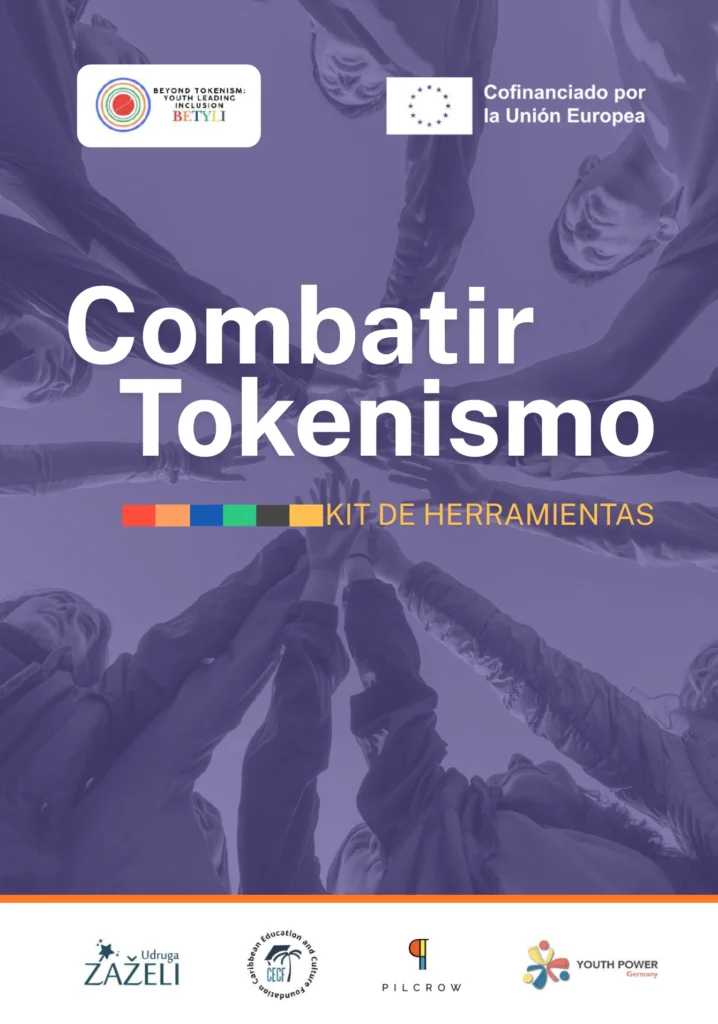
Combat Tokenism Toolkit
From symbolic inclusion to meaningful youth participation
The Combat Tokenism Toolkit is an educational resource developed within the Beyond Tokenism: Youth Leading Inclusion (BETYLI) project, co-funded by the European Union. It provides youth workers, educators, and organisations with the conceptual grounding and practical tools needed to recognise, challenge, and move beyond tokenistic practices in youth participation.
⇒ What the Toolkit Covers
The toolkit combines theory and practice across four foundational chapters and a comprehensive 5-day non-formal training programme, offering reflection tools, participatory methods, and self-assessment instruments. It supports users in understanding how tokenism manifests and how to cultivate authentic, youth-led inclusion.
Key components include:
Understanding Tokenism – defining tokenism and its impact on individuals and organisations.
Examples and Case Studies – identifying common patterns and real-life manifestations of symbolic participation.
From Tokenism to Genuine Inclusion – exploring frameworks such as Hart’s Ladder of Participation and co-creation principles.
5-Day Training Curriculum – ten interactive sessions guiding participants from awareness to action through experiential learning, role play, and project design labs.
⇒ Pedagogical Framework
Grounded in the principles of non-formal education, the toolkit promotes experiential learning, self-reflection, and youth empowerment. It invites trainers, youth leaders, and NGOs to co-create learning spaces where young people act not merely as participants but as equal partners in decision-making. The sessions are adaptable for diverse contexts and group sizes, with inclusive facilitation tips embedded throughout.
⇒ Purpose and Impact
The Combat Tokenism Toolkit aims to transform how youth participation is understood and practiced across Europe and beyond. By helping organisations shift from representation to shared ownership, it strengthens inclusive cultures that value every voice. The resource empowers youth workers to build structures of genuine influence—where participation leads to impact, and inclusion becomes both a principle and a practice.

This manual is available in more 4 Languages:




Funded by the European Union. Views and opinions expressed are however those of the author(s) only and do not necessarily reflect those of the European Union or the European Education and Culture Executive Agency (EACEA). Neither the European Union nor EACEA can be held responsible for them.