CIRCFOOD – Circular Food Economy: Reducing waste and carbon footprint
Project Overview
Project: Circular Food Economy: Reducing Waste and Carbon Footprint (CIRCFOOD)
Duration: 01 September 2025 – 30 June 2027
Reference Nr. KA220-YOU-75FF526D
Grant Amount: 250,000 €
Funding Programme: Erasmus+ Programme – Key Action 2: Cooperation Partnerships in Youth
What's About
The Circular Food Economy: Reducing Waste and Carbon Footprint (CIRCFOOD) project is a European cooperation initiative aimed at empowering young people and youth workers to better understand and address the environmental challenges related to food waste and unsustainable consumption patterns.
Food waste represents a major environmental, economic, and social issue across Europe. Large quantities of food are lost or discarded throughout the food supply chain, contributing significantly to greenhouse gas emissions and inefficient use of natural resources. At the same time, many young people are increasingly concerned about climate change and sustainability but often lack accessible tools and knowledge to translate this awareness into concrete actions. Through non-formal education, research, and digital learning tools, the project promotes sustainable practices and encourages young people to become active contributors to a more circular and responsible food system.
By bringing together organisations from several European countries, the project fosters collaboration, knowledge exchange, and innovative educational approaches that support the transition toward a greener and more sustainable Europe. The consortium combines expertise in youth work, education, sustainability, and digital learning in order to create resources that are both practical and accessible for youth organisations across Europe.
In addition to developing educational resources, the project aims to strengthen the role of youth work in addressing environmental challenges. Youth workers play a crucial role in shaping young people’s attitudes, behaviours, and civic engagement. By equipping youth workers with innovative tools and methodologies, the project supports the integration of sustainability topics into youth work activities and encourages young people to reflect on their everyday choices related to food consumption and waste.
The project also seeks to inspire behavioural change by encouraging young people to see themselves as active participants in building more sustainable communities. Through collaborative learning, digital tools, and international cooperation, participants will explore how circular economy principles can be applied to everyday life and how small changes in food consumption habits can contribute to reducing environmental impact at local and European levels.
The CIRCFOOD project aims to:
Raise awareness among young people about the environmental and social impact of food waste.
Strengthen the capacity of youth workers to educate young people on sustainability and circular economy principles.
Develop innovative educational resources focused on circular food systems and sustainable consumption.
Promote sustainable behaviours that contribute to reducing food waste and carbon footprint.
Create digital learning tools and platforms accessible to youth organisations across Europe.
Encourage youth participation in sustainability initiatives at local and European levels.
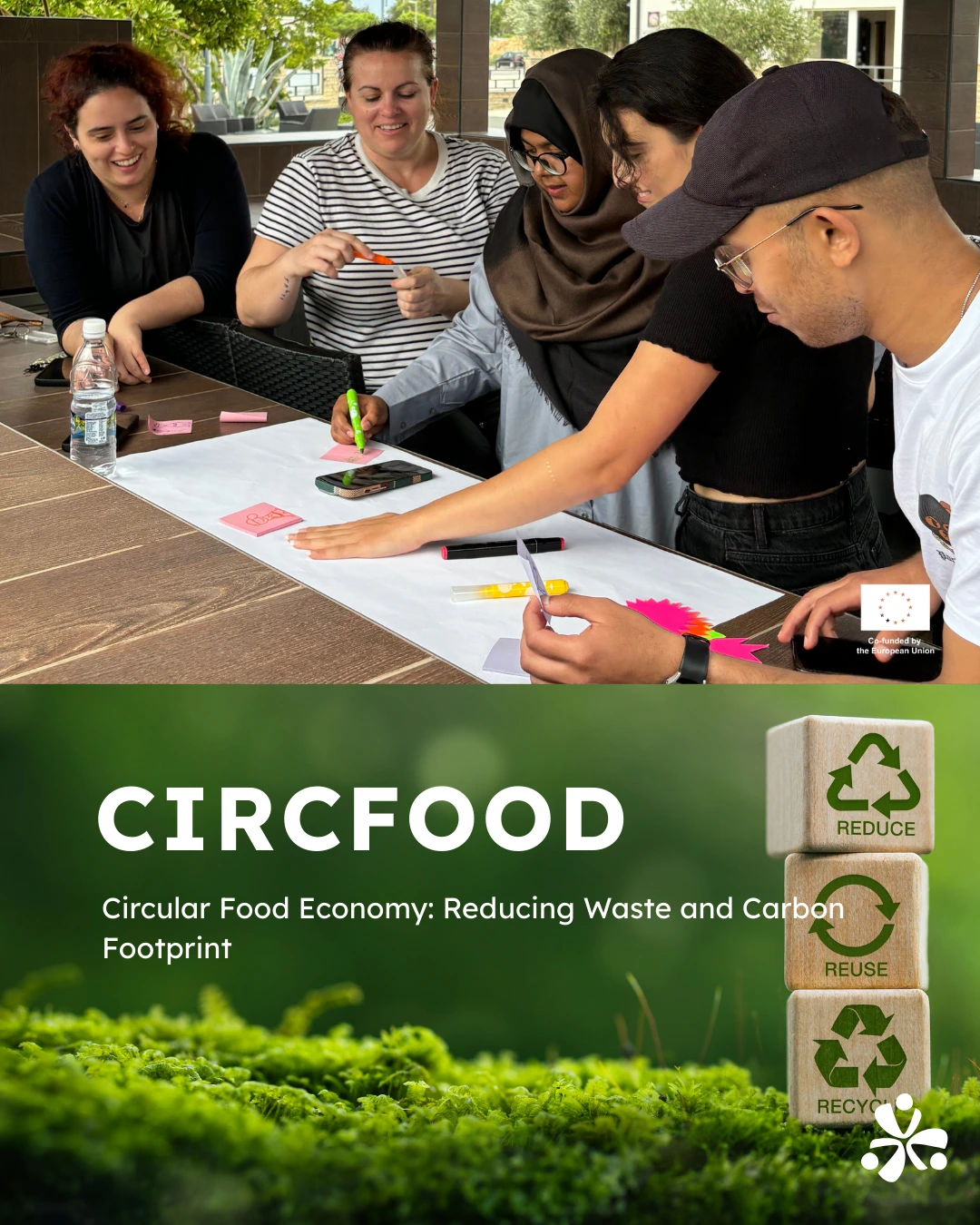
The Objectives
Project Activities
The project is structured around several key activities:
- Research and Analysis
Partners will conduct research on young people’s attitudes toward food waste, sustainability, and circular economy practices across participating countries. The findings will help identify knowledge gaps and opportunities for educational intervention.
- Development of Educational Materials
Based on the research results, the consortium will create educational resources and a toolkit designed to support youth workers in implementing sustainability-focused learning activities.
- Digital Learning Platform
An interactive online platform will be developed to host training materials, learning modules, and digital tools that allow young people and youth workers to explore circular food economy concepts.
- Capacity Building Activities
Training sessions and workshops will be organised for youth workers and young people to develop practical skills related to sustainable food systems and responsible consumption.
- Dissemination and Awareness Campaigns
The project will promote its results through online campaigns, events, and communication activities aimed at raising awareness and engaging a wider audience in sustainable practices.
Expected Results and Impact
The CIRCFOOD project will produce several important results:
A comparative research report on youth perceptions of food waste and sustainability.
An educational toolkit for youth workers on circular food economy.
A digital learning platform providing open educational resources.
Interactive learning tools to support sustainability education.
Increased awareness among young people about sustainable food practices.
Strengthened cooperation between youth organisations across Europe.
Ultimately, the project aims to empower young people to become active agents of change in promoting sustainable food systems and reducing environmental impact.
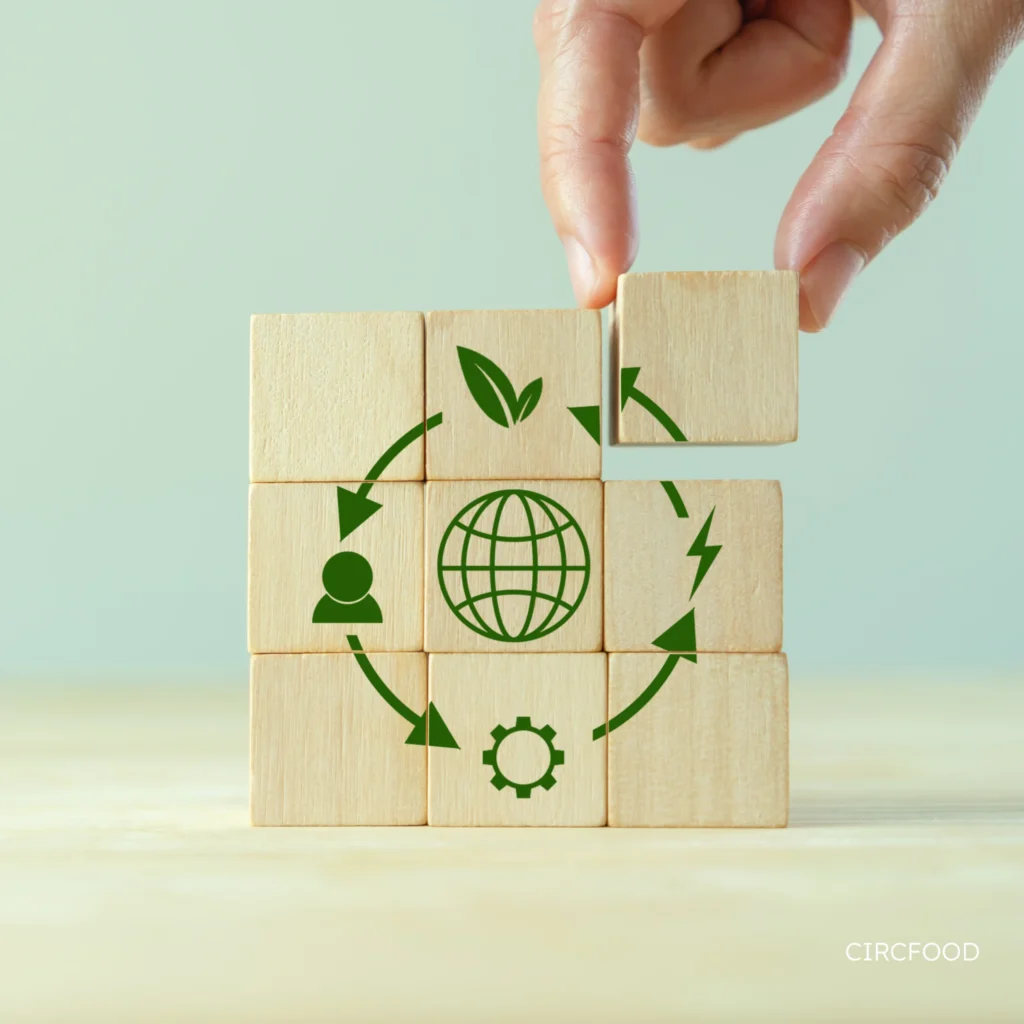
Project Partners
The project brings together organisations with expertise in youth work, sustainability, and education from across Europe:
Associação Juvenil de Peniche – Portugal (Coordinator)
Poenta – Serbia
Learning Library OÜ – Estonia
Youth Power Germany e.V. – Germany
DOMAS – Croatia
Through this international collaboration, the consortium combines diverse experiences and perspectives to address the challenge of food waste from multiple angles.

Funded by the European Union. Views and opinions expressed are however those of the author(s) only and do not necessarily reflect those of the European Union or the European Education and Culture Executive Agency (EACEA). Neither the European Union nor EACEA can be held responsible for them.